Finding extra strands on your pillow, in the shower drain, or wrapped around your hairbrush can feel deeply unsettling. You are far from alone — hair loss in women is much more common than most people realise, with around 40% of women experiencing significant thinning by the age of 50, and roughly half of all women noticing some form of hair loss in their lifetime. Yet because hair is so closely tied to identity and confidence, the emotional impact often outweighs the medical conversation around it.
The good news is that many causes of female hair loss are treatable, and several can even be reversed when caught early. This guide explains the most common reasons women lose hair, the treatment options available in the UK, and when it is time to speak to a dermatologist rather than waiting it out.
What Causes Hair Loss in Women?
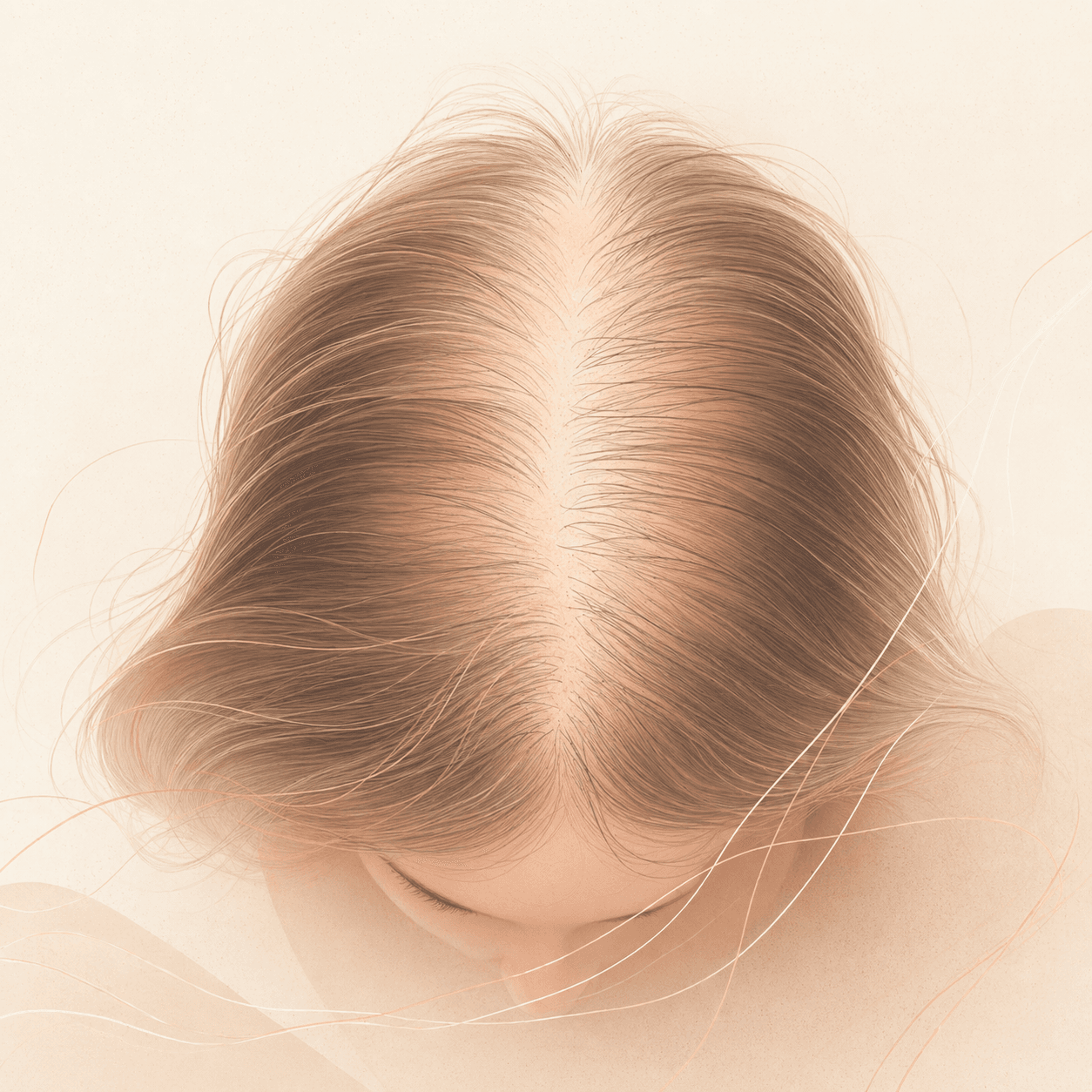
Unlike male pattern baldness, hair loss in women rarely follows a single, predictable pattern. Instead, it tends to show up as diffuse thinning across the crown, a widening parting, or a noticeable reduction in ponytail thickness. The cause is usually a combination of genetic, hormonal, and lifestyle factors.
The most common forms include:
Female pattern hair loss (androgenetic alopecia) — The most frequent cause of long-term thinning. It is driven by genetic sensitivity to androgens, particularly dihydrotestosterone (DHT). Symptoms typically appear gradually after the age of 30, but can begin earlier in women with conditions like polycystic ovary syndrome (PCOS).
Telogen effluvium — A reversible, diffuse shedding triggered by a physical or emotional shock to the system. Pregnancy, surgery, severe illness, rapid weight loss, and bereavement are classic triggers. It can push up to 70% of hair into the resting phase (compared with the normal 14%), and shedding usually appears 2–3 months after the event. Most cases resolve within 6–9 months once the trigger is removed.
Menopause and perimenopause — Falling oestrogen and progesterone levels, combined with a relative rise in androgens, can dramatically affect hair density. In one survey of nearly 6,000 women by Newson Health, 50% reported thinning hair and 39% reported active hair loss during this life stage.
Nutritional deficiencies — Low iron (ferritin), vitamin D, vitamin B12, and zinc are all linked to increased shedding, and are particularly common in women with heavy periods or restrictive diets.
Thyroid disorders — Both an underactive (hypothyroidism) and overactive (hyperthyroidism) thyroid can cause hair to thin or fall out.
Alopecia areata — An autoimmune condition that causes round, smooth patches of hair loss anywhere on the scalp.
Tight hairstyles and traction alopecia — Repeated pulling from braids, weaves, or tight buns can permanently damage follicles along the hairline.
How to Tell Which Type of Hair Loss You Have
Recognising the pattern of shedding is the first step in identifying the cause. Diffuse thinning that comes on suddenly and dramatically — particularly months after a stressful event — points strongly toward telogen effluvium. Slow, gradual widening of the parting line over years suggests female pattern hair loss. Smooth, coin-sized bald patches usually mean alopecia areata, while a receding hairline and breakage along the temples can suggest traction alopecia or frontal fibrosing alopecia.
A dermatologist can confirm the diagnosis using a combination of clinical examination, dermoscopy (a magnified scalp view), pull tests, and blood work to rule out thyroid disease, iron deficiency, and hormonal imbalance. In some cases, a small scalp biopsy may be needed.
Treatment Options for Hair Loss in Women in the UK
There is no single cure for every type of female hair loss, but the right combination of treatments can slow progression and, in many cases, restore visible density. Early diagnosis matters — most therapies are far better at protecting existing hair than regrowing what has already been lost.
Topical minoxidil (Regaine for Women) — Available over the counter in 2% and 5% formulations. Applied daily, it can slow thinning and partially restore hair in some women. Results take 3–6 months, and stopping treatment usually means losing the regained hair within a year.
Oral anti-androgens — Spironolactone is the most commonly prescribed in the UK for female pattern hair loss, particularly when PCOS or other signs of hormonal imbalance are present. Cyproterone acetate, finasteride (off-label), and bicalutamide are also used in specialist settings.
Treating underlying causes — Iron and vitamin D supplementation, thyroid medication, or addressing menopausal symptoms with hormone replacement therapy can all halt or reverse hair loss when a deficiency or hormonal driver is identified.
Baricitinib (Olumiant) — A newer JAK inhibitor licensed for severe alopecia areata in adults. NHS access depends on specialist assessment and local commissioning.
Low-level laser therapy and platelet-rich plasma (PRP) — Available privately, with growing evidence for both as adjunct treatments.
Hair transplantation — Considered when medical treatments have stabilised the loss but the cosmetic result remains unsatisfactory.
The NHS does cover GP assessment, blood tests, and dermatology referral when needed, but waiting times for specialist appointments can range from 8 weeks to over 18 months in some regions. Most prescription topical and oral treatments are not available on NHS prescription for pattern hair loss, which can leave women paying privately for months before they see results.
When to See a Dermatologist
It is time to seek expert help when:
- Shedding has lasted more than 3 months without improvement
- You are losing hair in distinct patches rather than diffusely
- The scalp itself looks red, scaly, scarred, or painful
- Hair loss is accompanied by fatigue, weight changes, irregular periods, or other systemic symptoms
- Over-the-counter treatments have not worked after 6 months
- The emotional impact is affecting your wellbeing
Acting early gives you the best chance of preserving the hair you have. Dermatologists can identify scarring forms of alopecia (such as frontal fibrosing alopecia or lichen planopilaris) that cause permanent loss if untreated, and they can prescribe stronger combinations of therapies than are available over the counter.
How Hebra Can Help You Get Answers Faster
Waiting months for an NHS dermatology referral is not just frustrating — for many forms of hair loss, that delay is the difference between recoverable and permanent damage. Hebra is built to close that gap.
With the Hebra app, you can take photographs of your scalp and parting line, describe your symptoms and triggers, and have your case reviewed by a specialist dermatologist — all without leaving your home. You receive a clinical assessment, a personalised treatment plan, and onward referral or prescription where appropriate, often within days rather than months.
If you have noticed thinning, shedding, or patches of hair loss and want a clear answer rather than another anxious search through the comments section, visit www.hebra.health to start your skin and scalp triage today. Your hair — and your peace of mind — deserve expert eyes on them sooner rather than later.
References
- British Association of Dermatologists. Hair loss female pattern (androgenetic alopecia). https://www.bad.org.uk/pils/hair-loss-female-pattern-androgenetic-alopecia
- Aventus Clinic. Hair Loss in the UK – A Statistical Deep Dive: Prevalence, Demographics & Trends. https://aventusclinic.com/hair-loss-in-the-uk-stats/
- Treatment Rooms London. Hair Loss in the UK: Facts & Statistics. https://www.treatmentroomslondon.com/hair-loss/uk-hair-loss-facts-statistics/
- Newson Health. Hair loss: are perimenopause and menopause to blame? https://www.drlouisenewson.co.uk/knowledge/hair-loss-are-perimenopause-and-menopause-to-blame
- DermNet NZ. Female pattern hair loss. https://dermnetnz.org/topics/female-pattern-hair-loss
- StatPearls / NCBI. Telogen Effluvium. https://www.ncbi.nlm.nih.gov/books/NBK430848/
- Bolt Pharmacy. Causes of Hair Loss in Women: NHS Diagnosis and Treatment Guide. https://www.boltpharmacy.co.uk/guide/causes-of-hair-loss-in-women
- Wimpole Clinic. The Best Treatments for Hair Loss, According to the NHS. https://wimpoleclinic.com/blog/the-best-treatments-for-hair-loss-according-to-the-nhs/
- London Dermatology Centre. Hair Loss Treatment: NHS vs Private Dermatology. https://www.london-dermatology-centre.co.uk/blog/private-vs-nhs-dermatologist-hair-loss/
- Cleveland Clinic. Female Pattern Baldness: Symptoms, Stages, Causes & Treatment. https://my.clevelandclinic.org/health/diseases/24943-female-pattern-baldness